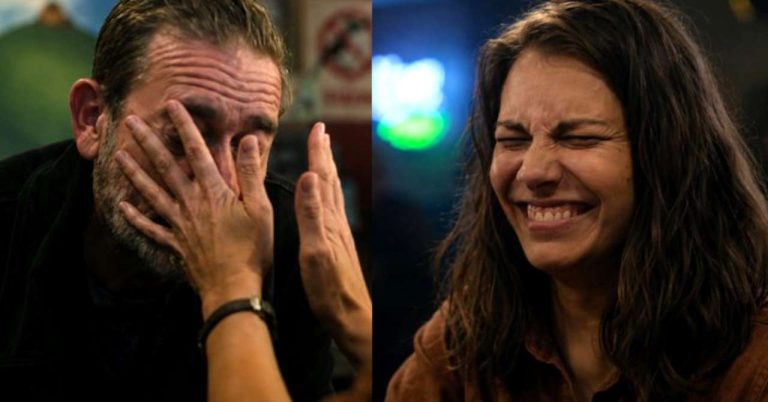

Meeting with an intimacy coordinator: “It’s not censoring: it’s creating in security”
Katherine O’Keefe is one of the most active intimacy coordinators in Hollywood today. For her, it is not a tool of control, but a creative framework where consent becomes an artistic driving force. Meeting on the sidelines of the last Deauville festival.
First: How did you become an intimacy coordinator? You came from the origin of the production…
Katherine O’Keefe: Yes. I had moved to Los Angeles and was already working in TV. And from the start, I was confronted with disconcerting situations: on the second series I was working on, a producer I didn’t know came and massaged me, without a word, in front of the whole team. No one reacted, and I realized how trivialized these behaviors were. Seeing other women experience the same thing, I understood that it was not a series of bad lucks, but a real systemic problem in the industry. When #MeToo arrived, I wanted to think about concrete solutions: how to make sets safer, more respectful, without slowing down creation.
And this is where the job of intimacy coordinator comes into your life…
KO: In 2018, while I was not committed to a series, I met the very first intimacy coordinator hired in Los Angeles. The profession came from theater – it was structured around 2014-2015 – and HBO wanted to make it compulsory, but there were not enough trained professionals on the West Coast. She was setting up a training program; I helped her build it for six months, then I started. I never looked back.
Concretely, what does your work consist of?
KO: The simplest thing is to say that I’m a bit like a stunt coordinator, but for sex or nudity scenes. My role is to make sure everything is shot safely, professionally and artistically. I read the scene, I break it down, then I talk about it with the director to understand their vision. Then, I meet each actor and actress individually: this is the moment when they confide to me their limits, their experiences, sometimes simply physical details to take into account. Then I liaise with the legal departments, the agents, the suits. Before, for example, costume designers didn’t even have access to nudity clauses, even though they are the ones who dress and protect the actors. Today, everything is clear, written, shared.
Legal matters seem central in the United States…
KO: Yes. Before any scene of simulated sex (anything beyond a passionate kiss) or nudity, an amendment to the contract is drawn up which details what is accepted and what is not. Since 2020, the law requires that this document be communicated 48 hours before filming, to avoid any last minute pressure. It goes through the legal department, the agents, then the actor signs. And even if signed, there is no obligation to film if the environment becomes inappropriate. On the other hand, production cannot ask for more than what has been agreed in writing. This is a huge step forward.
Have you ever had to modify a scene after discussing it with the actors?
KO: Yes, very often. Most of the time the problem is with the storyline. Many authors are embarrassed to write sex scenes and leave them vague. I had a show where the script just said, “They’re getting laid.” » The director was thinking of a naked and explicit sex scene, the actress of a passionate, clothed kiss. Without conversation, it would have been disastrous. Sometimes too, it’s the actors who have brilliant ideas: on one series, a couple was tired of always doing the same “sensual” scene. We changed the energy, added movement, spontaneity – and it became more alive, more real.
Has this new profession changed the representation of intimacy on screen?
KO: Yes, I think so. For a long time, sex scenes were seen as gratuitous or decorative. I think intimacy is part of the human condition, and it deserves to be shown with as much attention as violence or comedy. What we are doing is not removing these scenes, but making them more conscious, more fair. We want actors to feel proud of their work, not that they “survive” a scene.
You have worked on very different series: Vida, Pam & Tommy, The L Word: Generation Q…
KO: Yes, and also Mythic Quest for Apple TV+, Rutherford Falls for Peacock, Daisy Jones & The Six on Prime Video, and even Grey’s Anatomy, where intimacy coordination has become established in recent years. Vida remains a very strong memory: it was a Starz series about two sisters, one straight, the other lesbian, who return to LA after the death of their mother. The love scenes there were magnificent, full of emotion and respect.
How do you see the evolution of this profession on the French side?
KO: By working with professionals from France, I felt a cultural difference. The Americans come from a very puritanical culture, the French from a culture that claims to be sensual. Here, setting a limit can sometimes be perceived as a lack of maturity or professionalism. But my job is not to censor – on the contrary, it allows artists to express themselves more freely. When everything is clear, filming becomes more creative, not less.
And what do you say to those who see your role as a form of censorship?
KO: It’s a misunderstanding. If I have to interrupt a take, it’s because something serious happened, or the preparation was botched. My goal is that everything is anticipated, that everyone knows what they are doing and why. On the day of filming, I should hardly have to intervene: the scene can then unfold naturally, with confidence.