
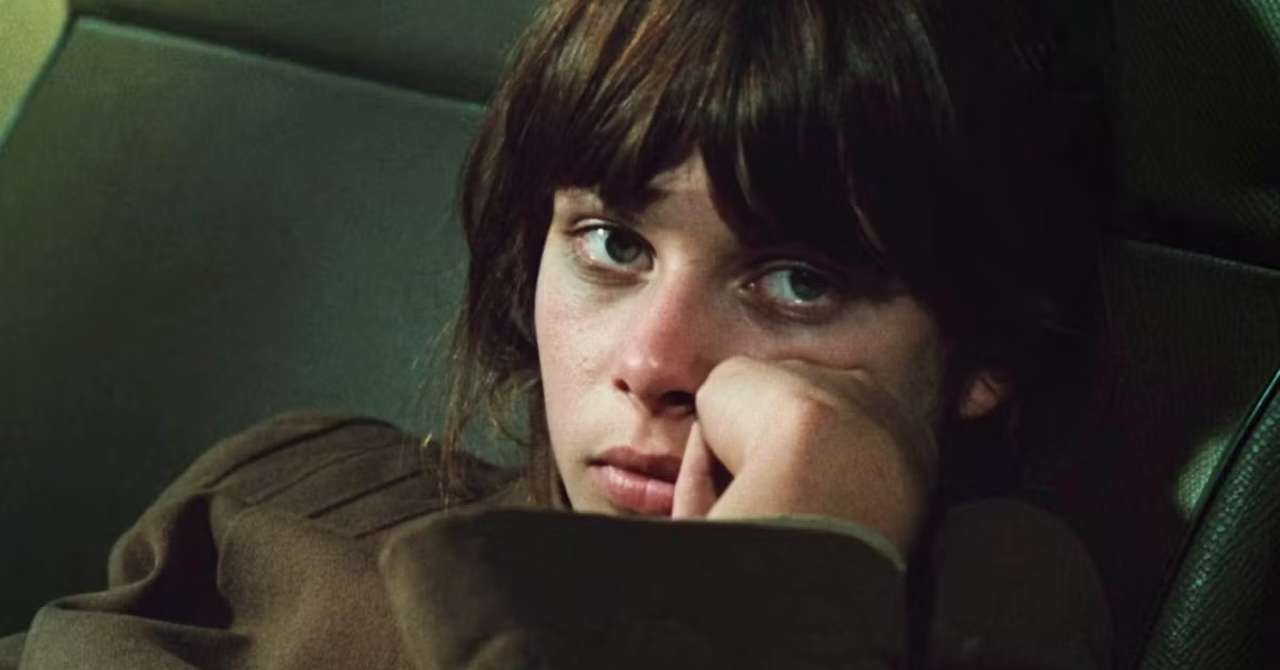
Nastassja Kinski wins her battle against Wim Wenders
“I see today that Nastassja Kinski should have been better protected”
This Wednesday, German director Wim Wenders announced in a press release that he was withdrawing the film. False Movement of any broadcast.
She is lying on a bed, wearing only underwear. She is 13, the actor is 30. In a sequence lasting less than two minutes, he lies on top of her, slaps her and then caresses her face.
The legendary actress of Paris, Texasthe German actress Nastassja Kinski, had requested the removal of this scene in which she appears topless, at the age of 13. A battle that lasted ten years.
The image of the actress, blonde in a pink sweater in the 1984 Palme d’Or, marked the history of cinema. It was already with Wim Wenders that she took her first steps in the cinema in False Movementin 1974.
If in Paris, Texas she plays a young woman working in a peep showthe actress never appears naked. In this first collaboration with Wenders where she plays a young mute girl named Mignon, maintaining an intimate relationship with an adult man, Nastassja Kinski is naked. His lawyer also pointed out that this nudity scene did not appear in the original novel by Peter Handke from which it is adapted False Movement.
The actress had been trying since 2011 to enter into discussions with the director in order to make him hear her discomfort, reports the German daily South German Zeitung.
Last May, to the same newspaper, she declared: “Even though, at 13, I didn’t know much yet, I had already noticed that it wasn’t normal. It was my first film, my first director, he didn’t protect me“. The actress also reported in 2024, to the German channel RTL, that she took refuge in the bathroom after filming the famous sequence: “I hid it, I was a very withdrawn person at the time”.
Five years later, she finally hired her lawyer, who then wrote to Wenders to agree on a “maintenance to resolve the problem“. In a long letter, the latter, through his lawyer, responds “that no discussion was necessary”.
Last week, on stage at the German Academy in Berlin, Wim Wenders declared that removing this scene “would set a precedent”, before continuing “(this) would affect you all” But he also added that he would no longer shoot this type of sequence in the same way because the times have changed: “today, sensitivities have changed, we live in a completely different world. (…) I can’t fault this 29 year old young man from 50 years ago”.
A suffering that Wenders finally recognized: “I see today that Nastassja Kinski should have been better protected”, he declared in a press release in which he apologized to her. “The numerous (…) discussions of recent days have largely contributed to refining my view of the events of the time“, declared the filmmaker. He announced that he was starting a “broad dialogue” with cinematographic institutions. The director would like to find “appropriate modes of treatment for controversial cinematographic works of the 20th century”.
“Only once this process has been completed (…) will we make the film available again“, he concludes.
At a time when many works are reread through the prism of consent and the representation of women in society, the German filmmaker’s decision opens a sensitive question: how to preserve cinematographic heritage without ignoring the words of the actresses who shaped it?