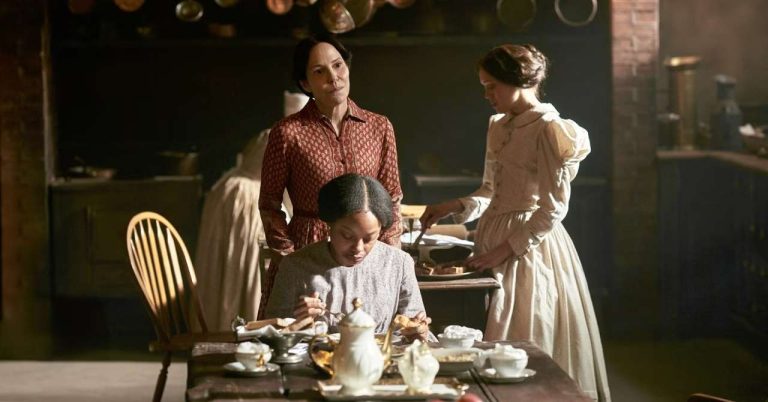
Ultimately, this remake of Little House on the Prairie was a good idea (review)
There was reason to be suspicious. But Netflix succeeded in its bet. This new version of the Ingalls stands out, for the moment, as a surprising reinvention, harsher, more modern, but still radiating the same values.
We really wondered why. Why resurrect such a cult series, so deeply anchored in popular culture for half a century?
But by choosing not to copy and paste the 1970s series, Netflix achieves the unexpected: giving interest to this rehash of the Ingalls family!
Still, there was reason to be wary. On paper, adapting Little House on the Prairie again seemed like a challenge sponsored by the algorithm. Almost an insult for many original fans: how can we touch a series that has become a Proust madeleine for several generations, without coming up against the memory of Michael Landon and the original (broadcast between 1974 and 1983) which left an immense mark on the world’s television heritage?
The good idea of Netflix and screenwriter Rebecca Sonnenshine is precisely not to try to photocopy nostalgia by reproducing cult moments. She prefers to redo everything, even if it means going back to Laura Ingalls Wilder’s third novel (Little House on the Prairie, published in 1934) to narrate the arrival of the Ingalls in Kansas, the starting point of her story. A period already mentioned in the 70s series, with the pilot “Genesis”, a somewhat forgotten 90-minute TV film, which took place before season 1, but which Netflix chooses to explore in great detail: the 8 episodes of this first season take place before Walnut Grove, before Nelly Oleson, even before the birth of Carrie (which arrives mid-season). This meadow shadows the family in the middle of a handful of pioneers in hostile territory. A choice that might seem confusing, but which allows us to tell the birth of the Ingalls myth differently.
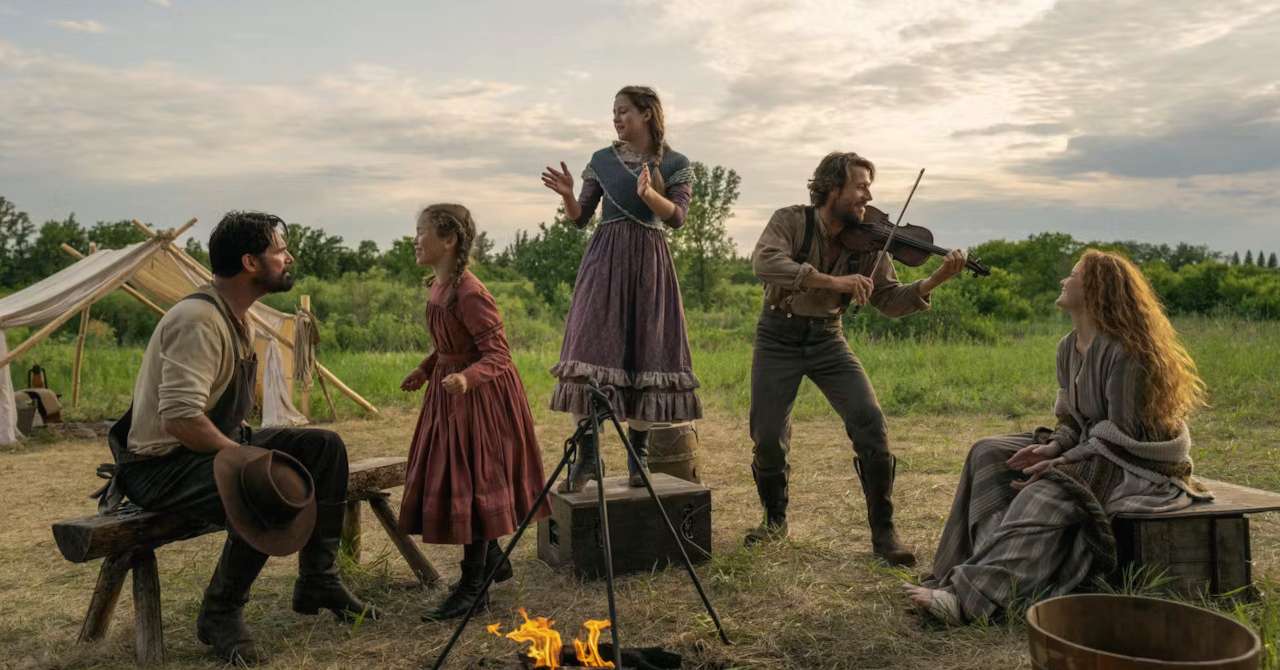
By moving the action to Independence, in the great plains of Kansas, the series voluntarily abandons the reassuring landmarks of the old version. Here, there are still no small houses surrounded by green fields: the territory is immense, wild, sometimes hostile. The Ingalls are not yet residents of an established community, they are pioneers who must build everything. This new Little House on the Prairie is first and foremost a survival series. It shows the concrete reality of this life of the settlers of the time: isolation, illness, fear, lack of resources and the permanent threat of an environment that they do not control. Each day completed in this still untamed nature becomes a small victory. Moreover, the survival of the Ingalls does not rest solely on the strength of Charles or the courage of Caroline: it rests above all on mutual aid. As in the original work, the real driving force of the story remains this simple but powerful idea: a family only stands together thanks to the ties that unite it.
The other big difference is the way we look at this period. Netflix is dusting off the traditional image of the conquest of the West, long told as a great, almost mythological adventure. The series does not erase the harshness of this era and gives immense space to indigenous populations, too often absent or silenced in classic stories. The Osage Nation becomes a central part of the story.
This decidedly more realistic tone does not alter the heart of the saga: family, transmission, tenderness and this ability to find hope in the most difficult times.
At the center of the story, Luke Bracey composes a Charles Ingalls different from that played by Michael Landon. More flirtatious, more solar, almost more modern in his relationship with the family, he nevertheless retains this paternalistic and protective fiber which was the charm of the character. He quickly imposes a reassuring presence. The young actresses charged with playing the Ingalls girls also have a heavy responsibility. They will obviously not immediately make us forget Melissa Gilbert and the historical interpreters of the family, but they bring real freshness. Alice Halsey, in the role of Laura Ingalls, particularly impresses. At only 11 years old, she gave the character this mixture of curiosity, imperfection and audacity which made the future writer so unique. Opposite her, Skywalker Hughes composes a more calm Mary and already marked by responsibilities.
Ultimately, Rebecca Sonnenshine succeeds in her audacious bet: respecting the heritage without remaining a prisoner of the past. This new Little House on the Prairie is not a nostalgic revival intended only for old fans. It is a gateway to the Ingalls universe for a new generation. Kansas is just the beginning of a great adventure. Minnesota, here we come! The Ingalls are already set to make their return in season 2, ordered by Netflix.
Little House on the Prairie, season 1, to watch on Netflix from July 9, 2026