Cannes 2026 – La Bola Negra: Francoism in the blood
Javier Calvo and Javier Ambrossi sign La bola negra, which weaves three stories of love and heritage between 1932 and 2017 to tell Francoism as heritage. An ample melodrama but weighed down by its own thesis.
The story begins in 1932, in a cultural circle in Granada. A young bourgeois presents himself to be admitted; members vote by secret ballot, each slipping a black ball or a white ball. Black wins. The vast majority of the bourgeoisie do not want him. If he is refused entry it is because the whole town knows that this young man likes boys. Federico García Lorca had written four pages of a short novel entitled The black bola starting from this scene. He did not have time to write the fifth: the Falangists assassinated him in August 1936.
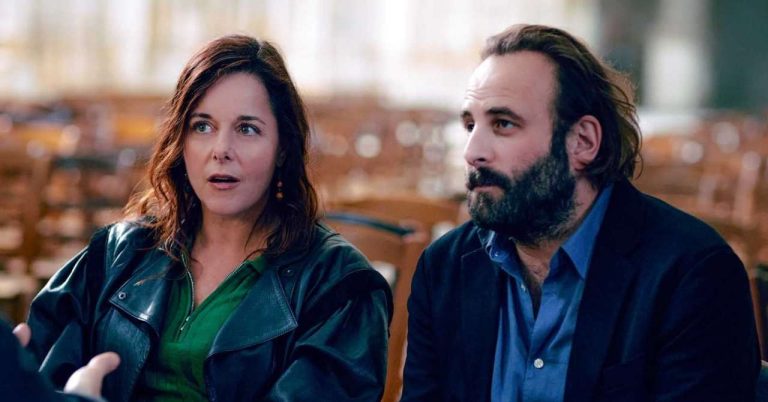
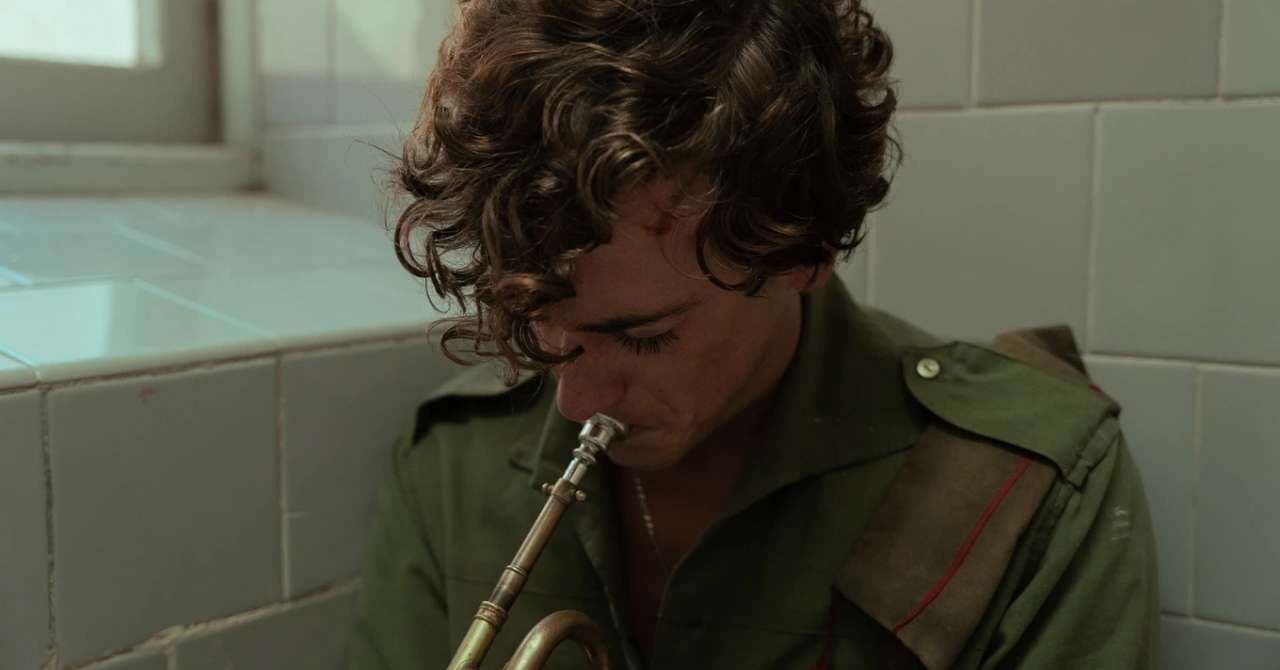
This is the hole that Javier Calvo and Javier Ambrossi, Los Javis as they are called, set out to fill. They wrote two additional stories around the Lorca fragment, and braided the three together. In 1937, at the heart of the Civil War, Sebastián (Guitarricadelafuente, lead singer) is a village trumpeter forced into the fascist army. He is entrusted with monitoring a Republican prisoner, Rafael (Miguel Bernardeau), whom he must make talk. He falls in love with her. In 2017, in Madrid, Alberto lives with his mother, a junkie who licks her wounds as best she can (Lola Duenas). The family secret that is gnawing at her is linked to her father… Three men, three eras, the same transmitted wound.
The project is therefore immense. In two and a half hours, the Javis want to fit Lorca, the Civil War, Francoism and its aftermath into a single melodrama. The opening alone is paralyzing and announces a great, hair-raising film. A village ball welcoming the Italian soldiers in 1937 is in full swing. When Italian planes approach, the party increases in intensity. But the bombers start shooting and disemboweling the villagers. Gris Jordana’s camera spins, blood spurts and popular music continues to play while the corpses pile up. It’s a magnificent scene, which immediately sets out the film’s agenda: telling how the Spanish holiday has always been punctuated by death.
Other sequences are of the same level. Penélope Cruz’s sung and danced number – a short role, written for her, halfway between sacred, whore and flamenco – is an anthology piece. The scenes between Sebastián and Rafael at the military hospital find a vibe muted eroticism, made up of hidden glances, discussions in low voices. And in these moments, Guitarricadelafuente, whose face evokes Botticelli’s young men, hypnotizes us with the sheer force of his presence.
The problem is that everything that separates these great moments is clearly underneath, and continues to elude us. The contemporary plot, in 2017, gets bogged down in family explanations which veer into counter psychology. The irruption of Glenn Close as an American academic who comes to give a lecture on Lorca completes the film’s shift into didacticism. And the obvious fear that the viewer will not understand leads Los Javis to highlight everything – the injury, the inheritance, the transmission, the danger of the present. So, yes, it is effective. The film manages to convey its message. But the great funeral song, pompous, twirling, the tomb of prevented loves is a little frustrating. The most beautiful scenes are the most whispered: a look at the back of a neck in a hospital corridor, two hands brushing against each other in a truck. The film breathes there, freed from the weight of its intentions.
Yet there is something that makes the film very stimulating. The black bola can be seen as the missing piece of La Mesias. In the series, fascism was everywhere without ever being named: it was infused in the sect, in the mother’s story, in this Spanish family which has not mourned. The film does precisely the opposite: it finally says out loud what the series had left unresolved. Francoism as a legacy, which circulates in bodies, which is transmitted from father to daughter to grandson, which resurfaces today under other names. We then understand why Los Javis wanted to make it big, and in Cannes: they had their most buried part there, and they put it on the table in one fell swoop.
Result ? Lumière applauded twenty minutes after the official screening; Screen’s star chart fell the next day to 2.1 (above average). And these two judgments say something equally true. The black bola is an important film without being a successful film. We come away divided, moved at times, embarrassed at others, but with the feeling of having seen a cinema that is trying something.