Reims Polar 2026: Disaster dominates a festival under tension (Palmarès)
From Gus Van Sant to Eye Haïdara, via Damien Bonnard, Reims Polar has captured a world under tension. An edition marked by paranoia, confirmed by a strange and worried track record.
Reims is over. The light is a little softer. But in the cinema queue, we continue to talk about films. At Reims Polar, the films don’t stop at the credits. And this sixth edition will have been marked by a persistent impression: that of a world under tension. It’s not just what was playing out on the screen – it’s also what was happening in the discussions, the meetings, the speeches.
Guest of the festival, Gus Van Sant did not come to act smart or deliver a formatted speech. On the contrary. In his discussions, he above all spoke of freedom, of trajectories, of this fragile moment when a film can still branch off. For him, crime fiction – even when he doesn’t practice it head-on – becomes a matter of looking: how to film someone, how to allow a gray area to exist, how to resist overly defined narratives. More than Hollywood anecdotes (however numerous), what remains of his masterclass is this simple but precious idea: cinema, even within a genre framework, must remain a space of doubt, a space of almost artisanal creation.
The next day, change of tone, but same mantra. Damien Bonnard received an award and gave an acting lesson. As instinctive and as little theoretical as the Portland filmmaker. From screenings to discussions, we quickly understood why he stands out today as one of the most unique faces of French cinema. First of all, his generosity. His involvement then. And above all, everything about him is a matter of contained tension. He speaks as he plays: on the verge of excess, but always precise. During the discussion, he talked about his roles, of course, but above all this feeling of unrest that never really leaves him. And which, strangely, fits perfectly with the atmosphere of the festival this year.
Finally last presence, Eye Haïdara came to present Mata. She arrives with a direct energy, a frank humor, but also something more troubled. “From MataI’ve become paranoid, I see agents everywhere,” she says, laughing. The film acts as a revealer: it changes the way we look at the world. And that’s exactly what many films here have sought to produce – a slight displacement of reality.
Because deep down, this Reims Polar 2026 will have been crossed by the same obsession: paranoia. Not necessarily spectacular, not always visible, but diffuse. She will have been able to infiltrate everywhere. In the stories, in the looks, and even in the silences. What the prize list confirms with almost theoretical clarity.
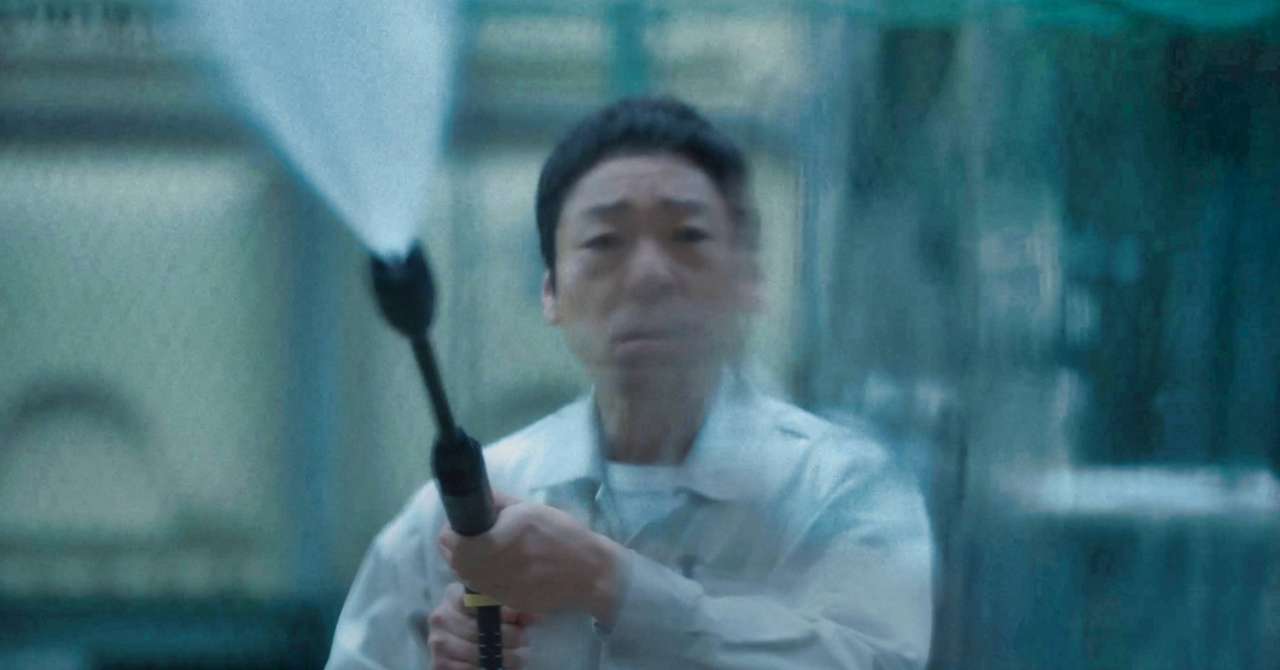
On the one hand, Disaster by Yutaro Seki and Kentaro Hirase, Grand Prix and Prix Police. A Japanese film that plays with nerves and perception. We follow several characters with seemingly unrelated lives, until a mysterious man appears in each of their stories, under different identities. As unexplained deaths occur, an investigation attempts to connect these events and understand who is behind this elusive presence. Impossible to cling to a stable truth. We are in a thriller that slides towards vertigo, almost metaphysical, where the threat no longer has a fixed face.
On the other, Winter of the Crow by Kasia Adamik, also doubly rewarded (Jury Prize and Critics Prize). Here, the paranoia is frontal, historical. Head to Poland in 1981, in the midst of martial law. Surveillance, control, organized fear. Welcome to a universe that Le Carré would not have denied. A woman finds herself caught in a political spiral that overwhelms her, and which gradually transforms everyday life into hostile territory. Where Disaster dissolves reality, Winter of the Crow locks it. Behind these two films, two approaches, but the same idea: the thriller is indeed a tool for telling contemporary anxiety. Whether diffuse or institutional, intimate or political.
As we close this parenthesis, it is obvious: crime fiction has never been so alive.
2026 AWARDS – REIMS POLAR
Grand Prix
DISASTER by Yutaro Seki & Kentaro Hirase (Japan)
Jury Prize
WINTER OF THE CROW by Kasia Adamik (Poland, United Kingdom & Luxembourg)
Police Prize
DISASTER by Yutaro Seki & Kentaro Hirase (Japan)
Critics’ Prize
WINTER OF THE CROW by Kasia Adamik (Poland, United Kingdom & Luxembourg)
Audience Award
RED CODE BLUE by Oskars Rupenheits (Latvia)
New Blood Price
FATHER by Tereza Nvotová (Slovakia, Czech Republic & Poland)
New Blood Prize from the Grand Est Region Youth Jury
GROWING DOWN by Bálint Dániel Sós (Hungary)